Why Countertop Fabricators Choose ActionFlow for Issue Tracking
ActionFlow is built specifically for the countertop fabrication industry. That means the issue categories, the reporting structure, and the workflow are designed around how shops operate, not adapted from a platform built for a different business entirely.
The issue collection tool lives inside the same system that manages quoting, scheduling, inventory, and client communication. Issue data connects to job data, and patterns that span multiple parts of the operation become visible in one place. There is no separate tracking system to run alongside everything else.
Dedicated support means that when a shop sets up issue tracking for the first time, they work with a single point of contact who knows their account and can help configure the system around how their shop runs. The account manager who builds the system is the same person who supports it going forward.
Frequently Asked Questions About Issue Tracking for Countertop Fabricators
What types of issues should countertop fabricators track?
Any event that costs time, materials, or client trust is worth tracking. That includes fabrication errors, material waste, scheduling conflicts, CAD mistakes, and communication breakdowns between front office and shop. Organizing issues into categories, purchasing, scheduling, fabrication, materials, is more useful than open-ended notes because it reveals patterns rather than isolated incidents.
How does ActionFlow’s issue tracking tool work?
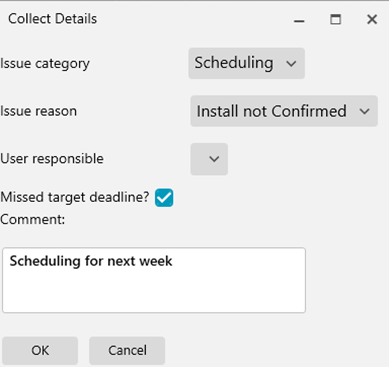
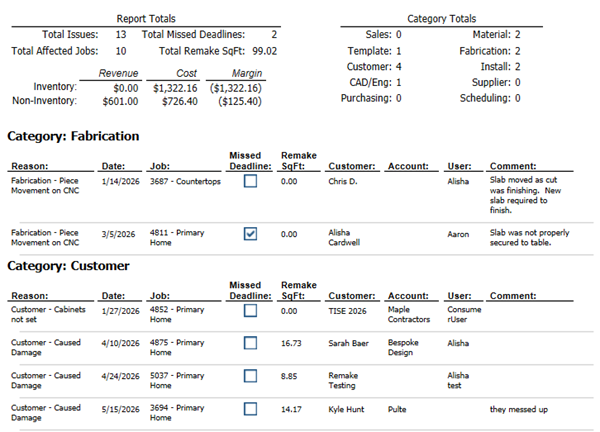
ActionFlow includes a built-in issue collection tool with predefined categories that let shop teams log issues directly inside the platform they already use for quoting, scheduling, and job management. Issues are automatically organized by category and pulled into a prebuilt issue tracking report that most clients review in a weekly operations meeting.
How long does it take to see results from issue tracking?
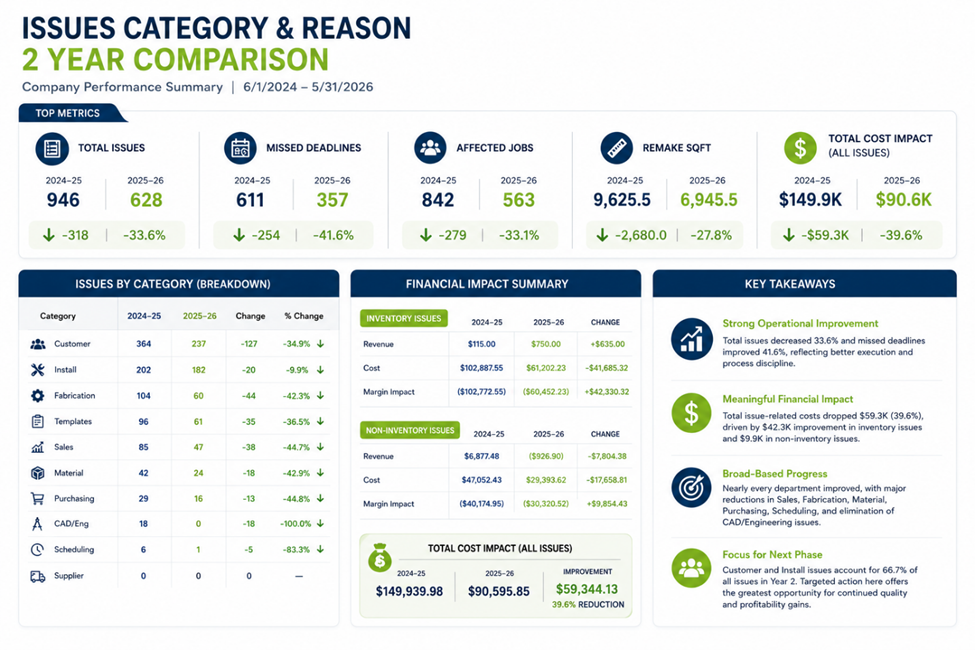
Shops that track consistently and hold weekly review meetings typically begin seeing measurable trends within 30 to 60 days. The $59,000 in recovered losses documented by one ActionFlow client was the result of a full year of consistent tracking and weekly review — results that compounded as the team addressed each identified category.
Do fabricators need separate software to track shop issues?
No. ActionFlow’s issue tracking is built into the same platform that handles quoting, scheduling, inventory, and client communication. There is no separate system to set up, maintain, or integrate.
Can issue tracking identify which part of the operation is generating the most problems?
Yes. The predefined category structure in ActionFlow’s issue collection tool allows shops to attribute issues to specific areas of the operation, making it straightforward to identify which categories are generating the highest volume or the most costly recurring problems over time.
Is issue tracking only useful for larger fabrication shops?
No. The client who recovered $59,000 in a year was running 20 jobs per day, but the process scales to shops of any size. A smaller shop with a lower job volume can still recover meaningful losses by identifying and addressing even a handful of high-cost recurring issues.
What is the ActionFlow issue tracking report?
The ActionFlow issue tracking report is a prebuilt report that pulls from issues logged in the platform and summarizes them by category and trend over time. It requires no manual setup and gives shop leadership the data they need to run a focused, productive weekly review meeting.
Stop Absorbing Costs You Have Not Measured Yet
Every issue that goes untracked is a cost the business is absorbing without knowing it. The fabricator who recovered $59,000 did not find a new revenue stream or cut a major line item. They made their existing operation visible and then they made it better.
ActionFlow gives countertop fabrication shops the tools to do the same. Define the issues that matter. Track them without adding to the administrative load. Review them often enough to take action before they repeat.
More profits. Greater peace of mind. That is what consistent issue tracking looks like in practice.